.png/:/rs=h:310,cg:true,m/qt=q:95)
Ceremonies are often accompanied by Ritual to express Unity
Handfasting
Signing a guest book
Lighting candles

Handfasting in wedding ceremonies involve the tying together of a couple’s hands or wrists with a cord, ribbon, sash, twine or vines to signify their union. The original ritual of 'tying the knot'.
Lighting candles
Signing a guest book
Lighting candles
.jpg/:/cr=t:12.51%25,l:0%25,w:100%25,h:74.98%25/rs=w:388,h:194,cg:true)
A flame can symbolise hope, warmth, and the brightening of lives. A unity candle ceremony can be used for a child in a naming ceremony, an adoption ceremony or for wedding ceremonies. Lighting a candle can also be done as an act of remembrance for a deceased relative or friend.
Signing a guest book
Signing a guest book
Signing a guest book

A guest book enables your guests to add a message - before, during, or after the ceremony. Creating a great keepsake that can be revisited in years to come.
Tea Ceremony
tree planting
Signing a guest book
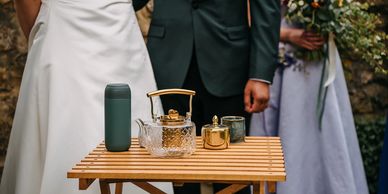
A Tea Ceremony is a gentle, symbolic moment where two people blend their chosen teas to represent the joining of their lives. Each ingredient carries its own meaning—warmth, comfort, strength, sweetness—and as the couple pours, stirs, and shares the first sip, they create a ritual that honours patience, presence, and the simple joy of building a life together.
After the ceremony, you can then gather the messages as a memento of the day.
tree planting
tree planting
tree planting

Depending upon the time of year, planting a tree in commemoration of this special occasion is a lovely idea and a great way to involve other children, close friends, or family members in the ceremony. Tree-planting also provides the opportunity to include words about the importance of nurturing and caring for the growth of the child.
Sand Ceremony
tree planting
tree planting

During the ritual, the couple/family pour different sands, of different colours into a single container, representing the union of their lives, experiences and families. The sand can no longer be separated, just as they can no longer be separated.
time capsule or memory box
time capsule or memory box
time capsule or memory box

The creation of a ‘time capsule’ or ‘memory box’. You can ask your guests to bring something to add to it such as family photos, recorded messages, gifts to be opened on a significant date in the future.
OATHING STONE or Crystal
time capsule or memory box
time capsule or memory box
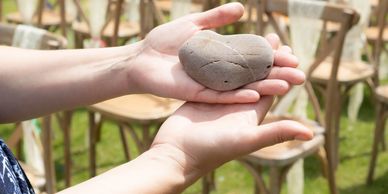
Oathing stone – Before Celtic tribes had access to wedding rings, they sealed their marriage by placing their hands on a stone while reciting their vows. Some modern couples incorporate this into their wedding ceremony. Often using a stone engraved with their names or wedding date.
wishing stone or sea shell
time capsule or memory box
wishing stone or sea shell

Why not include wishing stones or shells into the ceremony?
A beautiful natural and timeless tradition. In this ceremony, guests are given shells or stones to place wishes upon for the couple, before they are tossed into the sea, lake or stream!
Quiach
Painting ceremony
wishing stone or sea shell

Drinking from quaichs has been popular in Scottish wedding ceremonies for centuries to symbolise the binding together of two people in love, kinship and trust. It sees the couple filling the two-handled silver bowl with whiskey and sharing it with each other before passing it round the wedding party.
Log sawing
Painting ceremony
Painting ceremony

Couples in Germany are presented with a large log and a saw. By sawing the log in half as a team, it is believed they are proving their ability to work together in overcoming any obstacles that may come.
Painting ceremony
Painting ceremony
Painting ceremony

Instead of a sand ceremony, why not create a masterpiece on your special day!
Ring blessing

Include guests in your ceremony by having each person bless your wedding bands. Send one ring down one side of the aisle and the other down the opposite, giving every guest a chance to hold your rings and bestow their blessings and positive thoughts toward your marriage.
Jumping the broom
Jumping the Broom is a joyful, symbolic ritual where the couple leap together over a beautifully decorated broom to mark the start of their married life. Rooted in African and African‑American tradition, it represents sweeping away the past, honouring heritage, and stepping into a new chapter with intention, unity, and shared purpose.
Blindfolded Art
Blindfolded Art
Bring an unexpected touch of humour into your ceremony by drawing each other with your eyes closed. It’s a light hearted moment of pure surprise — the kind that fills the room with laughter and reminds everyone that love doesn’t have to be serious all the time. This simple, joyful ritual adds a beautifully human pause in your nuptials and never fails to delight your guests.